

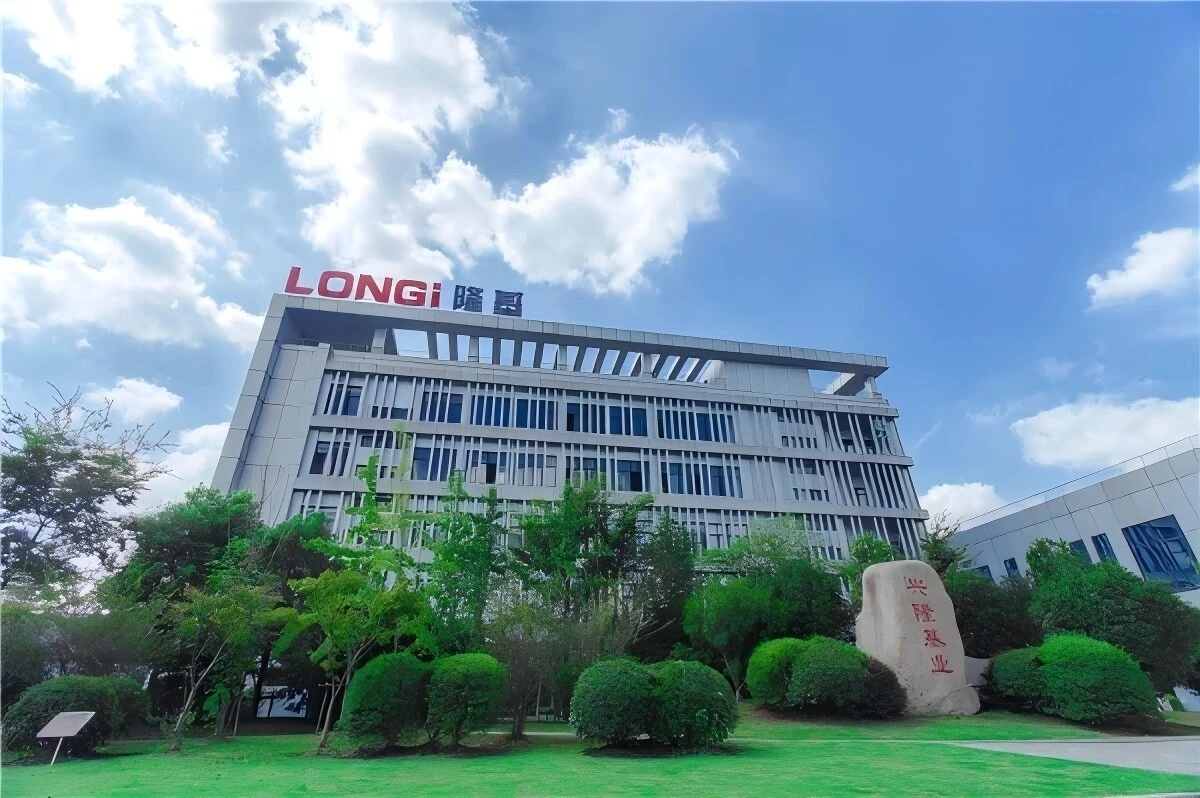
Recently, LONGi Green Energy released the industry's highest efficiency Hi-MO 9 module in Madrid, Spain, which is based on the high-efficiency HPBC 2.0 cell technology, the Hi-MO 9 module has a maximum power of 660W, with a conversion efficiency of up to 24.43%, and is planned to be introduced to the market in the second half of 2024.The launch of the Hi-MO 9 module triggered widespread attention in the industry, not only making significant breakthroughs in terms of double-face rate and Hi-MO 9 modules have not only made significant breakthroughs in terms of double-sidedness and conversion efficiency, but have also surpassed the current TOPCon products in terms of price/performance ratio
JX ENERGY CO.,LTD.
Recently, LONGi Green Energy released the industry's highest efficiency Hi-MO 9 module in Madrid, Spain, which is based on the high-efficiency HPBC 2.0 cell technology, the Hi-MO 9 module has a maximum power of 660W, with a conversion efficiency of up to 24.43%, and is planned to be introduced to the market in the second half of 2024.The launch of the Hi-MO 9 module triggered widespread attention in the industry, not only making significant breakthroughs in terms of double-face rate and Hi-MO 9 modules have not only made significant breakthroughs in terms of double-sidedness and conversion efficiency, but have also surpassed the current TOPCon products in terms of price/performance ratio.
(1) High Bifacial Ratio Combined with High Efficiency, Crystalline Silicon Battery Technology
In the field of photovoltaics, the double-sided rate, conversion efficiency and power of a cell are all key indicators of its power generation efficiency. Hi-MO 9 module efficiency has reached 24.43%, which is significantly higher than the efficiency value of TOPCon technology of about 23%, and the efficiency of the HPBC II cell behind the Hi-MO 9 module is even more than 26.5%, which reaches the theoretical efficiency of crystalline silicon solar cells (29%) of more than 91%. of more than 91 percent.
“TOPCon has enhanced power generation capability on the back side compared to HPBC II, making its total power about 5 watts higher than the front side. However, our Hi-MO 9 technology is more advanced than TOPCon, with 30 watts more total power. When we consider the power of the front and back sides together, Hi-MO 9, as a standard module, has a combined power that is 25 watts higher compared to the TOPCon products on the market. As a result, the Hi-MO 9's combined power performance is the highest in the market today.” Zhong Baoshen, Chairman of LONGi Green Energy, said, “We are confident that we can further increase our efficiency to 96% or even 97% in the future. We also believe that within the framework of crystalline silicon technology, it has become very difficult for the industry to realize significant performance improvements based on existing HPBC II products.”
Currently, the mass-produced bifacial rate of TOPCon technology is stabilized at around 80%, while HPBC II modules, with their extremely high frontal efficiency combined with a 70% bifacial rate, have a comprehensive power performance that significantly exceeds that of the TOPCon technology route. According to industry insiders, the launch of LONGi Green Energy Hi-MO 9 module not only highlights LONGi's leading position in the field of solar cell technology, but also foretells the direction of future solar cell technology development, and at the same time brings lower cost investment and higher return on investment for users.
(2) With the support of TaiRay Silicon, the cost reduction of BC cells is accelerated
In 2023, LONGi Green Energy realized silicon wafer shipments of 125.42GW, a year-on-year growth of 47.45%, and maintained the first place in global monocrystalline silicon wafer shipments for nine consecutive years. in the first quarter of 2024, the company realized silicon wafer shipments of 26.74GW, a year-on-year growth of 12.26%. In April this year, through continuous innovation and R&D, LONGi Green Energy successfully launched TaiRay Silicon wafers, which became the biggest innovation in this field in the past 10 years.
With the rapid development of PV technology, many different cell technology routes have emerged in the market, such as HJT, TOPCon and BC. Looking back at the past decade, the development of silicon wafer technology has mainly focused on changes in size, thinness, thickness and other exterior dimensions, which has been unable to keep pace with the diverse battery technology innovation.
It is reported that TaiRay Silicon wafer realizes the centralized control of resistivity, which makes the resistivity of the wafer more uniform and improves the conversion efficiency and yield rate of the cell. Secondly, the impurity absorption effect of TaiRay Silicon wafer is more excellent, which can effectively remove the metal impurities in the wafer and improve the purity and quality of the wafer. In addition, the mechanical properties of TeraSilicon wafers have also been significantly improved, with a 16% increase in bending strength compared to conventional products and stronger fracture resistance, which helps to reduce the fragmentation rate in the manufacturing process.
In the field of BC cells, the advantages of TaiRaySilicon wafers are fully realized. Through the use of TaiRaySilicon wafers, the conversion efficiency of BC cells has been improved by more than 0.1% on average, which reduces the cost of kWh and improves the income of power plants. In addition, the outstanding performance of TaiRaySilicon wafers also helps to reduce module repair chances and improve production efficiency, which further reduces the cost of downstream power plants.
(3) The integration of HPBC technology has great potential.
It took about 10 years for PERC to replace aluminum backyard, and only 5 years for TOPCon to replace PERC. Nowadays, TOPCon capacity is seriously saturated, and the new technology route to replace TOPCon may only take 2-3 years, and this process reflects the acceleration of technology iteration, similar to Moore's Law in the field of information technology. From LONGi Green Energy's point of view, instead of fighting for a market full of competitors in the past, it is better to seize the first-mover advantage of the new technology route.
If we use a vivid analogy to explain the characteristics of different technology routes, Baoshen Zhong vividly compares TOPCon, HJT and other technologies to a delicious seafood, while HPBC technology is like a delicate Buddha jumping over the wall. The Buddha jumps over the wall not only contains the freshness of seafood, but also combines a variety of ingredients and cooking techniques, presenting a richer flavor and nutritional value. Zhong Baoshen said that HPBC technology is precisely a collection of multiple technological advantages to improve the performance and efficiency of PV modules through the design of composite passivated back contact.
Entering 2024, news of TOPCon investment termination is common, and industry chain prices continue to be under pressure.BC and other future-oriented battery technologies are accelerating capacity transformation and gradually becoming mainstream in the market. In the next three years, LONGi Green Energy expects that the annual capacity of monocrystalline silicon wafers will reach 200GW, of which the capacity of “Tailor” wafers will account for more than 80%; the annual capacity of BC batteries will reach 100GW; the annual capacity of monocrystalline modules will reach 150GW
— Recommended —
-
 Unveiling the HPBC Battery Generation Two: A Dual Leap in Efficiency and Conversion Rates for Optimal Photovoltaic InstallationsRecently, LONGi Green Energy released the industry's highest efficiency Hi-MO 9 module in Madrid, Spain, which is based on the high-efficiency HPBC 2.0 cell technology, the Hi-MO 9 module has a maximum power of 660W, with a conversion efficiency of up to 24.43%, and is planned to be introduced t...Company News
 -
 How to choose the battery capacity of JA Solar Panels?JA Solar Panel is a commonly used solar power generation equipment, which provides people with a clean and renewable energy solution by converting solar energy into electrical energy.Company News
 -
 Solar Panel Lifecycle Waste Problem Turns Eco-ChallengeEver been curious about what happens to solar panels when they reach the end of their useful life?Company News
 -
 Solar's Sustainability Issue Use Gravity Batteries To CopeHave you ever thought about what happens to the surplus energy produced by our sun-loving solar panels?Company News
Submit Form